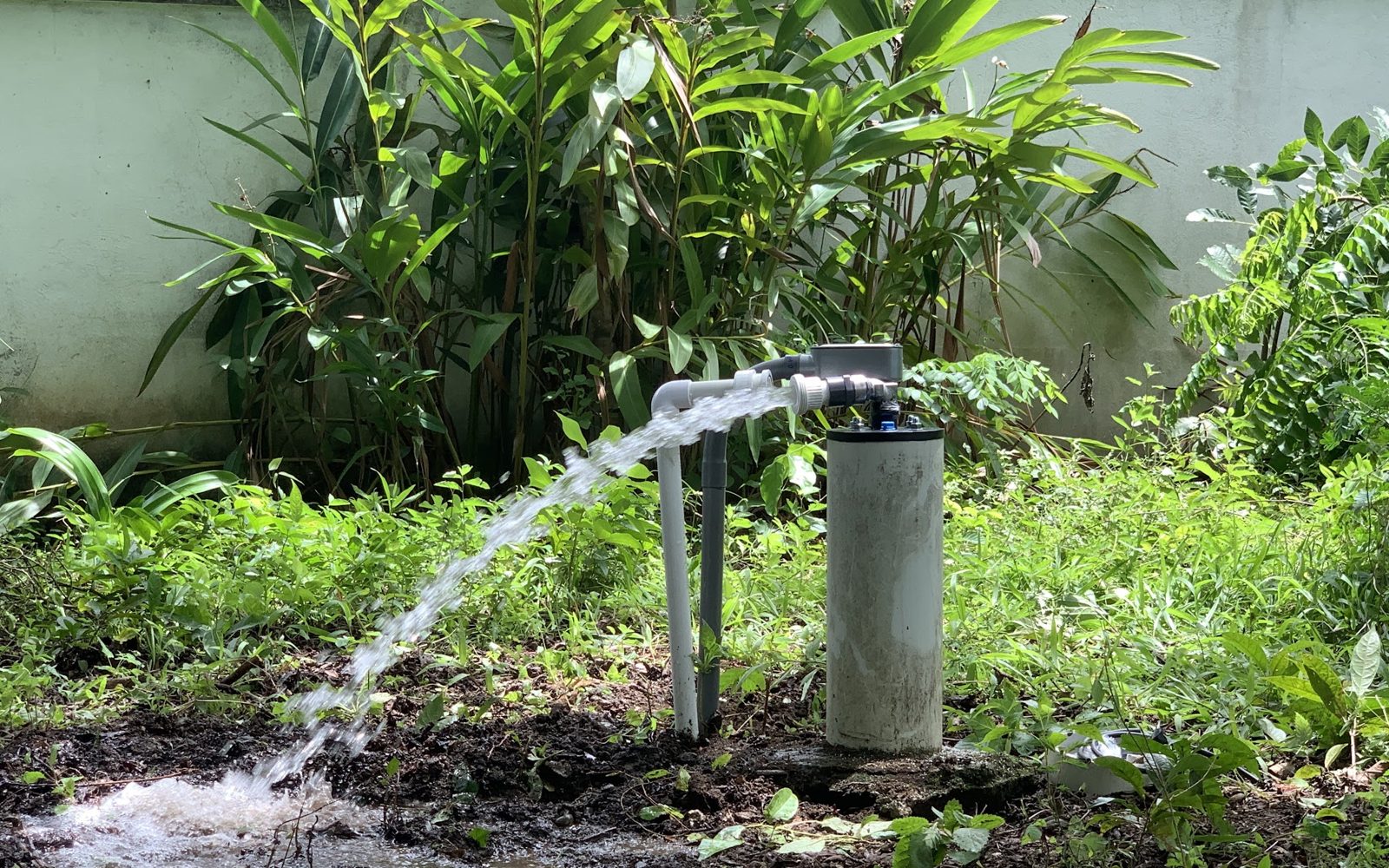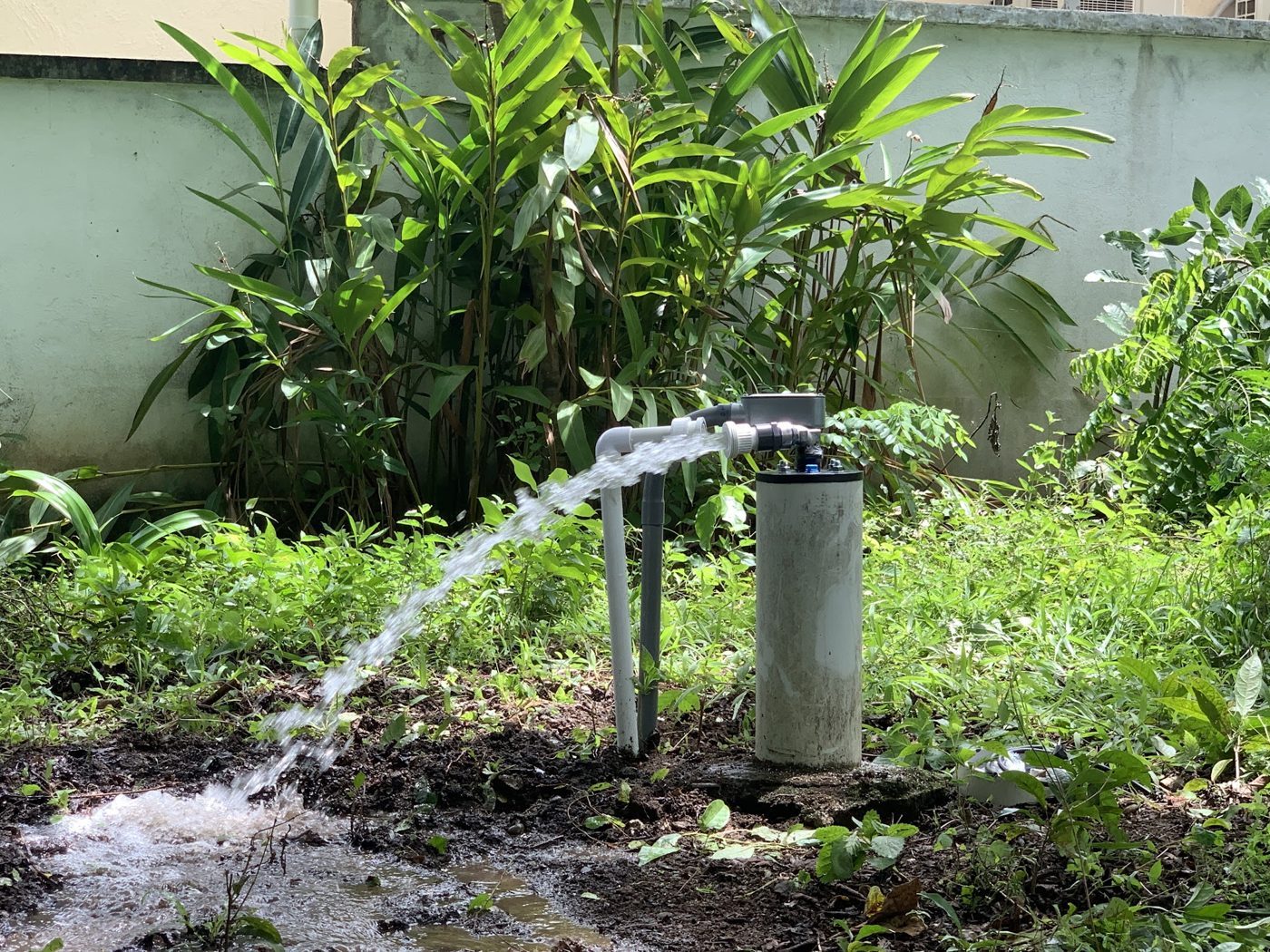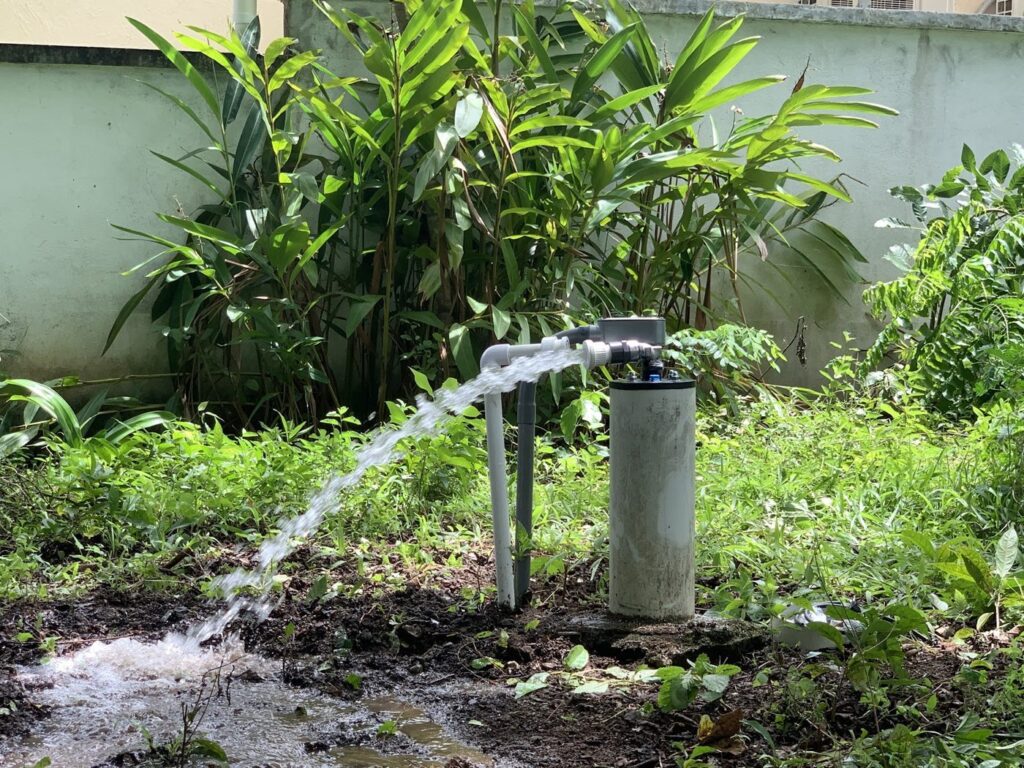
Living on the beautiful Azuero Peninsula means being part of a vibrant culture deeply tied to the land. From cattle ranching in Los Santos to sugarcane and crop farming in Herrera, agriculture is the lifeblood of our regional economy. For many homeowners, farms, and businesses in this region — often referred to as the Arco Seco — relying on a private water well is a necessity for daily life and independence.
However, this rich agricultural heritage comes with a hidden environmental cost. While groundwater is often viewed as naturally pure, the heavy use of fertilizers, pesticides, and herbicides across the region presents a serious, invisible threat to our water security.
At Pozos Santeños, we believe that true peace of mind starts with transparency and education. Understanding how agricultural chemicals interact with our local aquifers and water sources — and knowing the standards required to neutralize them — is the first step toward securing safe, pristine drinking water for your property.
The Science of Runoff: How Chemicals Enter Your Tap
The intense farming cycles in the Azuero region rely heavily on agrochemicals to maximize crop yields and protect livestock. When seasonal rains arrive, or during routine irrigation, these chemical residues dissolve into the ground. Through a natural process known as leaching, rainwater carries these dissolved synthetic compounds deep into the earth’s strata, or as surface water that makes its way into rivers and streams.
Eventually, these pollutants reach the underground aquifers — the exact water sources tapped by private residential and commercial wells.
None of this shows up the way a problem usually announces itself. Sediment clouds your water. Iron leaves rust stains. Sulfur smells like rotten eggs. Agricultural chemicals do none of that. At the concentrations typically found in groundwater, they don’t change the color, taste, or smell of your water at all — which means the only way to know they’re there is to test for them specifically, not to notice them.
Navigating the Data: Compliance and the COPANIT Standard
In Panama, public health and water quality are governed by strict legal benchmarks. The definitive framework for drinking water safety is the DGNTI-COPANIT 21-2019 standard. This regulation establishes maximum permissible limits for physical, chemical, and microbiological contaminants to ensure water is safe for human consumption.
While the COPANIT framework is comprehensive, typical water well tests in rural Panama only look for basic indicators:
- Total Coliforms and E. coli — microbiological safety
- pH and Turbidity — acidity and clarity
- Heavy metals
- Salinity and Total Dissolved Solids (TDS) — salt and mineral levels
While these tests are vital, they completely overlook synthetic organic compounds like organophosphates, carbamates, and triazine herbicides commonly used in local farming. A well can pass a basic lab test and still carry traces nobody tested for.
What the deeper testing found
Two national sampling campaigns did look for these compounds in Panamanian water, and they found them.
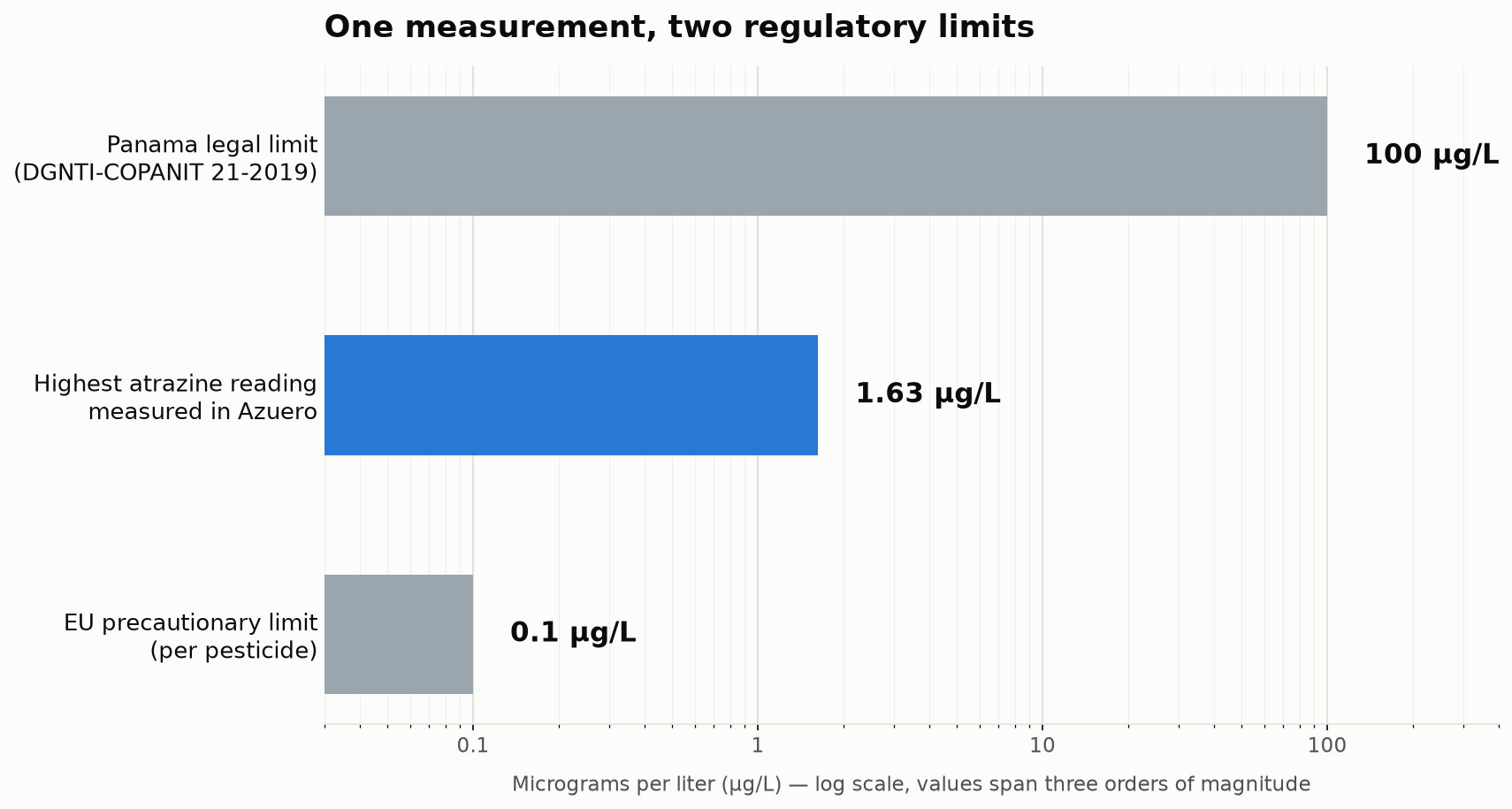
- Atrazine — the triazine herbicide used on the region’s crops — turned up at points across Azuero, the highest reading being 1.63 µg/L at a treated-network sampling point.
- Every detection sat inside Panama’s legal limit. That same reading is roughly 16 times what the European Union allows for any single pesticide — a number Europe sets as a precaution rather than as a danger line.
Limits are written one chemical at a time. Water carries a mix.
A 2026 Nature Health study comparing pesticide exposure across regions of Peru found cancer incidence running roughly 150% higher in the highest-exposure areas, even though none of the 31 pesticides tracked are individually classified as human carcinogens by the WHO. Where more agricultural chemicals get used, more of them end up in the surrounding soil and water — and Azuero is farm country, which is why sampling happened here in the first place. It is a fair reason not to treat “under the limit” as the end of the conversation, if peace of mind rather than compliance is what you’re after.
Engineering Peace of Mind: Multi-Stage Filtration Solutions
A standard sediment filter is excellent for trapping sand, rust, and dirt, but dissolved chemical molecules pass right through it. Stopping agricultural runoff takes a system built in stages, where each stage handles what the one before it cannot.
At Pozos Santeños, we design and install custom water treatment systems for the conditions here. These are the stages we build with:
- Activated Carbon Filtration: your frontline defense against agricultural runoff. Activated carbon is manufactured with millions of microscopic pores, and through a process called adsorption, chemical molecules like pesticides, herbicides, and chlorine bind to the carbon and are trapped permanently before they reach your faucet. It can be sized as a carbon block filter for a single point of use, or as a backwashing filter for an entire home.
- Reverse Osmosis (RO) Purification: for the ultimate standard of purity. By forcing water through a semi-permeable membrane under high pressure, RO systems filter out particles as small as 0.0001 microns, removing heavy metals, dissolved solids, and stubborn chemical traces that standard filtration leaves behind.
- Ultraviolet (UV) Disinfection: because agricultural areas also face a higher risk of bacterial contamination from livestock runoff. UV sterilization uses targeted light waves to neutralize 99.9% of bacteria and viruses without introducing harsh chemicals into your drinking water.
Trust the Azuero Water Experts
Securing your water supply shouldn’t involve guesswork. At Pozos Santeños, we combine deep local expertise with state-of-the-art technology to provide the families and businesses of Los Santos and Herrera with reliable well drilling, system integration, and advanced filtration.
We do not believe in one-size-fits-all fixes. Our team analyzes your specific terrain, evaluates your property’s demands, and configures a resilient water network with top-tier pumps and hardware built to withstand local conditions.
Most properties come down to one of two paths:
- Point of use. For when your concern is the water you drink and cook with. Compact, and in many cases something you can install yourself.
- Whole-home. For when you want every tap on the property delivering the same water. This usually starts with a site visit, so the system matches what your water actually needs.
Take control of your water security today. Tell us about your water and we will help you find the right setup. Let us build a custom system that gives you, your family, and your business absolute certainty with every single drop.