Wondering what to do after an earthquake if your home runs on a well? The first thing to know is that a well can keep pumping and still need a check. When the ground moves, wires can loosen, pipes can shift and sediment can get stirred up from the bottom of the well, and not all of that shows at the kitchen tap. A calm, step-by-step check tells you whether everything came through fine or whether you need a hand.
While you check, drink and cook with bottled or boiled water. If your area has MINSA water notices, follow those first.
Days like these are what the 72-hour emergency kit is for, the one SINAPROC (Panama’s civil protection agency) recommends every family keep: among other things, it holds enough water for the whole family to get through three days without the tap. As a guide, the U.S. Centers for Disease Control and Prevention (CDC) recommends at least one gallon (about 4 liters) per person per day, and more in a hot climate like ours. If you used part of that supply, take the chance to restock it.
Summary: what to do after an earthquake with your well, in five steps
| Step | What to do | Warning sign |
|---|---|---|
| Before you start | Turn off the breaker for the pump. Use bottled or boiled water for drinking and cooking. | MINSA notices in your area: follow them first. |
| 1. Electrical | Check the wires from the breaker to the pump control and down to the wellhead. | Loose, disconnected or wet wire: breaker off until a technician repairs it. |
| 2. Well and plumbing | Check the casing, the ground around the well and the piping to the house or tank. | Cracked or crooked casing, ground cracks or broken pipes: get it checked before using it. |
| 3-4. Flush and reconnect | Open a flush valve, turn on the pump and run the water to the ground, away from the house, until it runs clear. Then reconnect the house or tank. | Lots of new sediment: disinfect before reconnecting (step 5). |
| 5. Disinfect and test | If there was new sediment or cracking, disinfect the well. Then do a bacteria test, which we recommend after any emergency. | Until you have the result, keep using bottled or boiled water. |
1. Check the electrical side
Water and electricity don’t mix, and an earthquake can tug on or loosen the wires that feed your pump. That’s why the check starts with the pump’s breaker turned off: that way you can go over the whole system without worrying.
Follow the wires from the breaker supply to the pump control and down to the wellhead. You’re looking for damaged or loose wires and connections, and you want the connections and the control box to be dry. If any wires have been pulled out, disconnected or are wet, leave the breaker off until a technician or electrician repairs them.
2. Check the well and the plumbing
The wellhead is the best place to start, because that’s where ground movement shows first. The casing is what keeps surface water out of your well, so it’s worth a careful look: is it cracked, crooked or leaning, and are there new cracks in the ground around it?
Then follow the piping all the way to your house or tank, and make sure it’s all intact and connected. A union that came loose or a broken pipe can let surface bacteria into the system, and should be repaired before returning to service.
3. Flush the water before it goes to the house
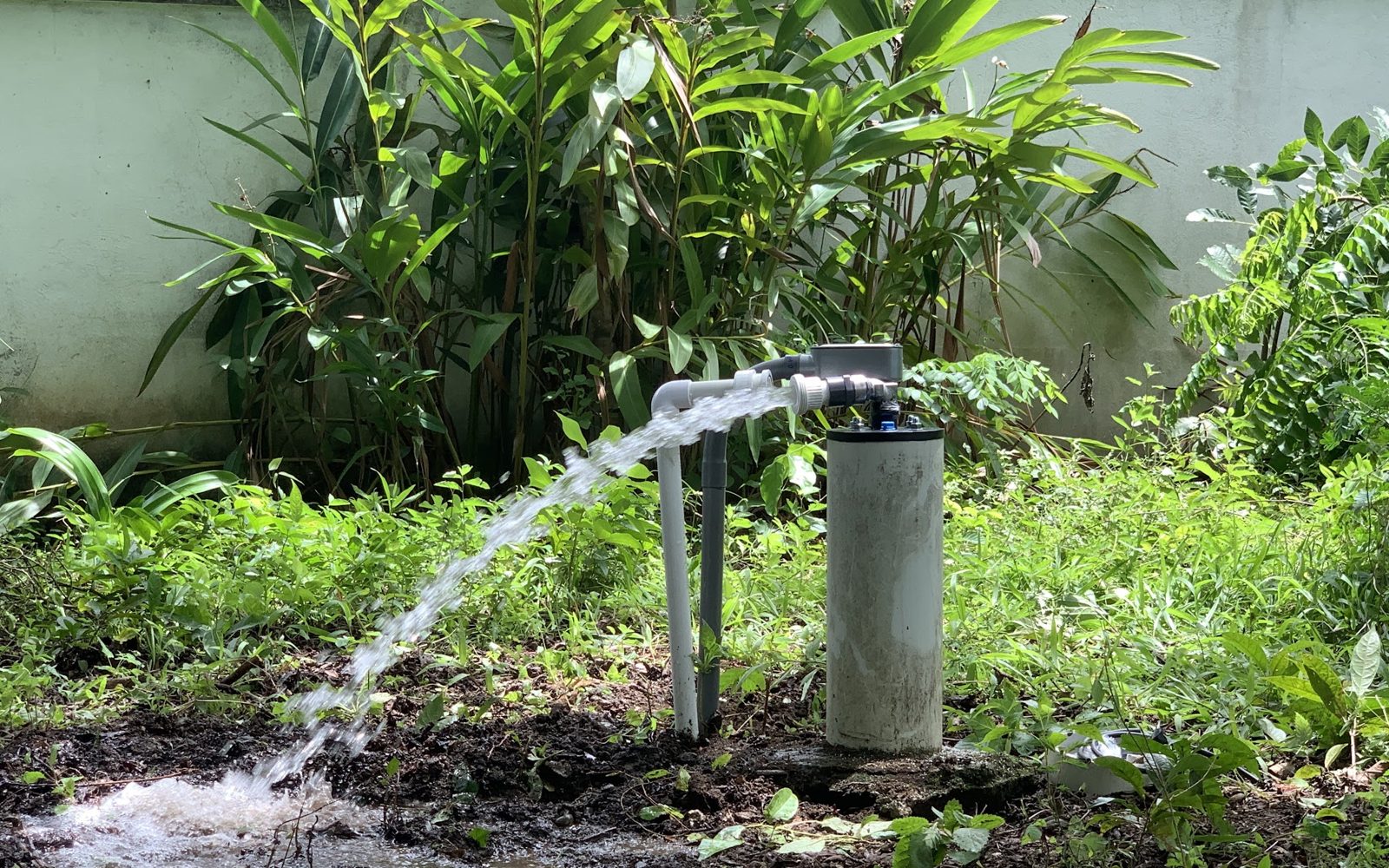
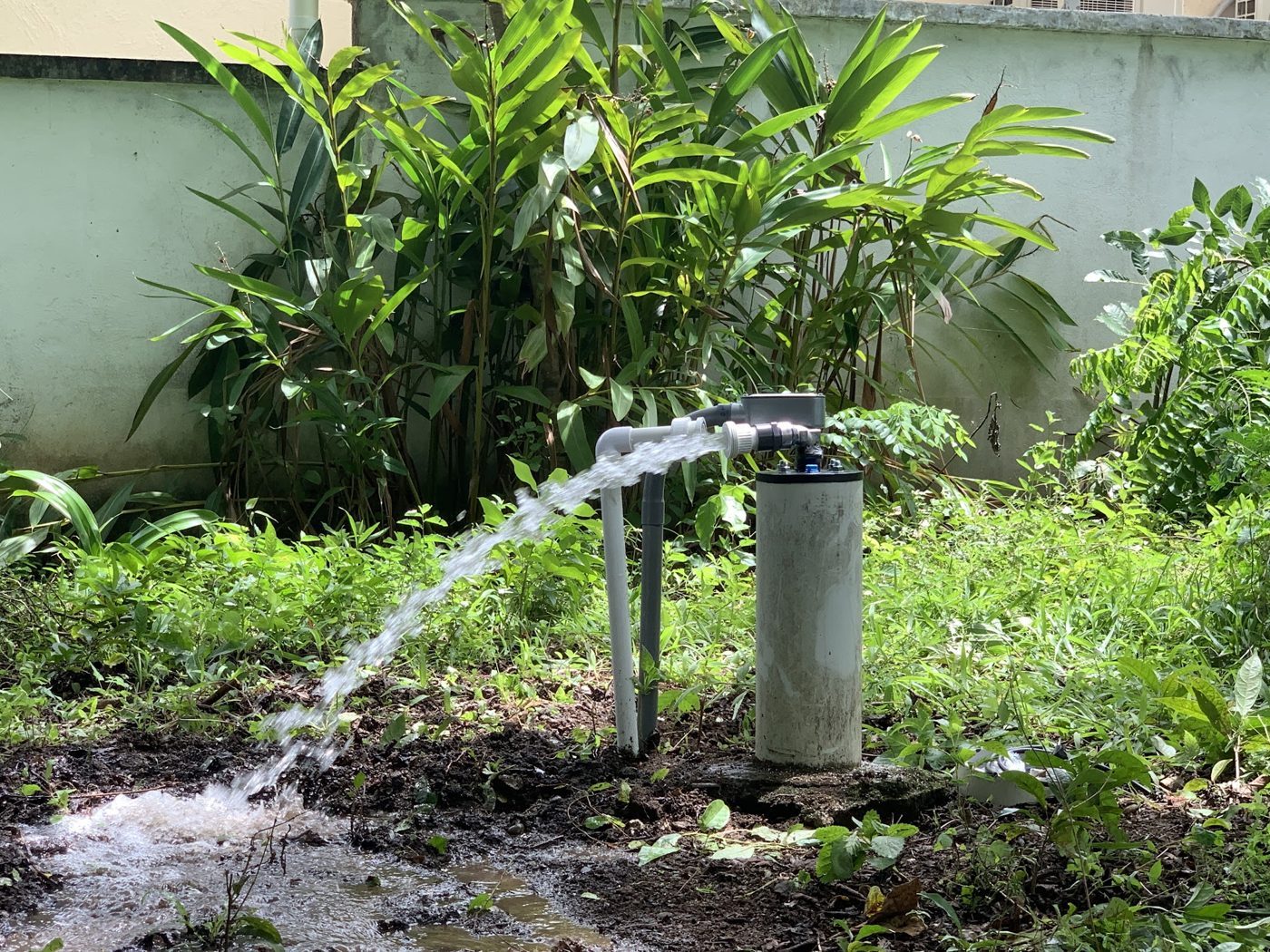
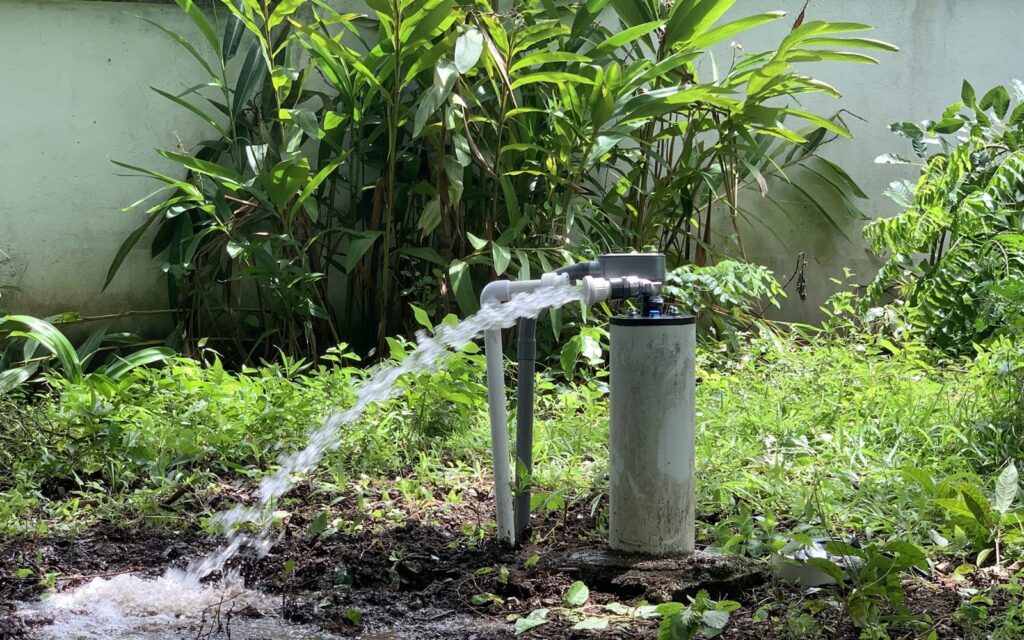
If everything looks good, it’s time to run the pump, but without sending water to the house just yet. Many wells have sediment issues after an earthquake. It’s best to pump that first water to the ground, away from the house, to avoid carrying any contamination into your tank or plumbing.
Open a flush valve or a union, in a spot where you can pump the water to the ground without flooding anything, then turn on the breaker for the pump. If you have filters or treatment equipment, bypass them while you flush and disinfect, so that first water never reaches them. Let it run until the water comes out clear.
4. Reconnect the house
Once the water runs clear and your system is in working order, you can turn the water back to your house or tank. If the water won’t clear, or keeps coming out with lots of new sediment, go to step 5 first.
5. Disinfect the well if there is new sediment or cracking
Lots of new sediment, or cracks in the ground around the well, are signs that surface water or soil may have gotten in. In that case we recommend disinfecting the well before returning it to service. If the well is damaged, it needs to be repaired first before disinfecting.
How much chlorine you need depends on the depth and diameter of your well. The CDC’s well disinfection guide and the North Carolina health department guide are independent sources that explain how you can do this on your own if needed.
We always recommend a bacteria test (total coliform and E. coli) after any significant change or emergency, such as an earthquake or a flood: it’s what confirms the water is safe to drink. If it has been disinfected, the CDC says to sample once all traces of chlorine are gone, at least 7 to 10 days after disinfecting. Until you have the result, keep drinking bottled or boiled water. To see what a standard well test in Azuero checks, and what it leaves out, read our guide to Azuero well water.
If you found damage
A cracked or crooked casing, broken piping or a pump that won’t start needs a proper check before the system goes back into use. Strong aftershocks can also move things you’ve already checked, so if there are significant aftershocks, it’s worth repeating all the checks.
If your well or your water changed after the earthquake, get in touch and we’ll look at it with you. We look at the well, the pump and the water together, so you can trust your water again.
Sources
- CDC — How to disinfect wells after an emergency: cdc.gov
- SINAPROC — 72-hour emergency kit (La Estrella de Panamá, 2025, in Spanish): laestrella.com.pa
- CDC — How to create an emergency water supply: cdc.gov
- North Carolina Department of Health and Human Services — Well disinfection after flooding (PDF): ncdhhs.gov
- National Ground Water Association — Water well maintenance for well owners: wellowner.org
- SINAPROC — Recommendations for earthquakes (in Spanish): sinaproc.gob.pa
- Pozos Santeños field experience (2022-2026)